
Clearing Up the Confusion: Beyond the Couch and Crystal Balls
When I told people I was learning psychology, I got two main reactions: “Can you read my mind?” or “Are you going to be analyzing me?” Neither is true, and both reflect common misconceptions about this field.
Let’s clear up what it really is – and what popular culture often gets wrong.
Psychology Is: Evidence-Based Science
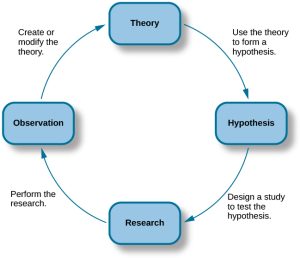
It uses the scientific method to understand behavior and mental processes. This means:
-
Forming hypotheses based on observations
-
Designing studies to test these hypotheses
-
Collecting and analyzing data
-
Drawing evidence-based conclusions
-
Having other researchers replicate findings
Real example: When studying memory, psychologists don’t just speculate about how memory works. They design experiments where participants learn information under different conditions, then test recall hours or days later. The results give us evidence about what helps or hinders memory.
Psychology Isn’t: Just Common Sense
You might hear: “Well, that’s just common sense!” But it often reveals counterintuitive truths:
Common sense says: In an emergency, more people means more help.
Psychology shows: The bystander effect – the more witnesses present, the less likely any individual is to help.
Common sense says: Rewarding good behavior always works.
Psychology shows: Overjustification effect – sometimes external rewards can actually decrease intrinsic motivation.
The Major Misconceptions Debunked
Myth 1: Psychology = Psychiatry
-
Psychology: Focuses on behavior, thoughts, emotions; uses therapy, research
-
Psychiatry: Medical doctors who can prescribe medication; focus on biological aspects
Myth 2: Psychologists can read minds/body language perfectly
-
Reality: We study patterns and probabilities, not magic. Body language gives clues, not certainties.
Myth 3: Psychology is only about fixing problems
- Reality: Positive psychology focuses on strengths, happiness, and thriving – not just treating illness.
Myth 4: Therapy is just talking about your childhood
-
Reality: Modern therapies like CBT are present-focused, practical, and skill-based.
The Different Faces of Psychology
Psychology isn’t one thing – it’s many specialties: 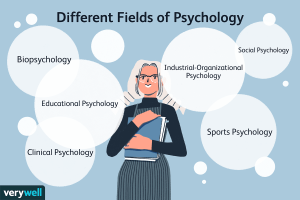
Research Psychologists: Conduct studies to expand knowledge
Clinical Psychologists: Assess and treat mental health concerns
Industrial-Organizational Psychologists: Improve workplace dynamics
Educational Psychologists: Enhance learning environments
Sports Psychologists: Optimize athletic performance
Forensic Psychologists: Work within legal systems
What Psychology Actually Studies
Here’s what we’re really exploring:
-
Biological bases: How brain chemistry and structure influence behavior
-
Cognitive processes: How we think, remember, and solve problems
-
Development: How we change from infancy to old age
-
Social influences: How groups affect individual behavior
-
Mental health: How psychological well-being is maintained or disrupted
Try This: Spot the Psychology in Your Day
For the next 24 hours, notice where psychology shows up:
Morning: Why does your alarm snooze habit persist? (Learning theory)
Commute: Why do drivers behave differently in traffic? (Social psychology)
Work: What motivates you to tackle hard tasks first? (Motivation theory)
Social media: Why do certain posts grab your attention? (Attention and perception)
Evening: Why do you remember some parts of your day but not others? (Memory processes)
The Limits of Psychology
It’s important to know what psychology can’t do: 
-
Predict individual behavior with 100% accuracy
-
Provide simple answers to complex human experiences
-
Tell you “the right way” to live your life
-
Replace medical treatment for biological conditions
Why Getting This Right Matters
Understanding what psychology actually is matters because:
-
It helps us apply it correctly in our lives
-
It prevents harmful misconceptions (like self-diagnosing)
-
It respects the scientific rigor of the field
-
It allows us to appreciate its real value – not as magic, but as systematic understanding
My Personal “Aha” Moment
I used to think psychology was about analyzing people. Then I learned about fundamental attribution error – our tendency to overestimate personality and underestimate situations when judging others’ behavior.
That realization changed how I view people’s actions. Now, when someone cuts me off in traffic, instead of thinking “What a jerk!” I consider: “Maybe they’re rushing to the hospital. Or maybe they didn’t see me.”
That shift – from judgment to curiosity – is psychology’s real gift.
Your Turn: Question Your Assumptions
This week, notice one assumption you make about human behavior. Then ask: “What might psychology say about this? Is there research on this topic?”
Share your observations below. Let’s practice moving from assumptions to evidence-based understanding together.