
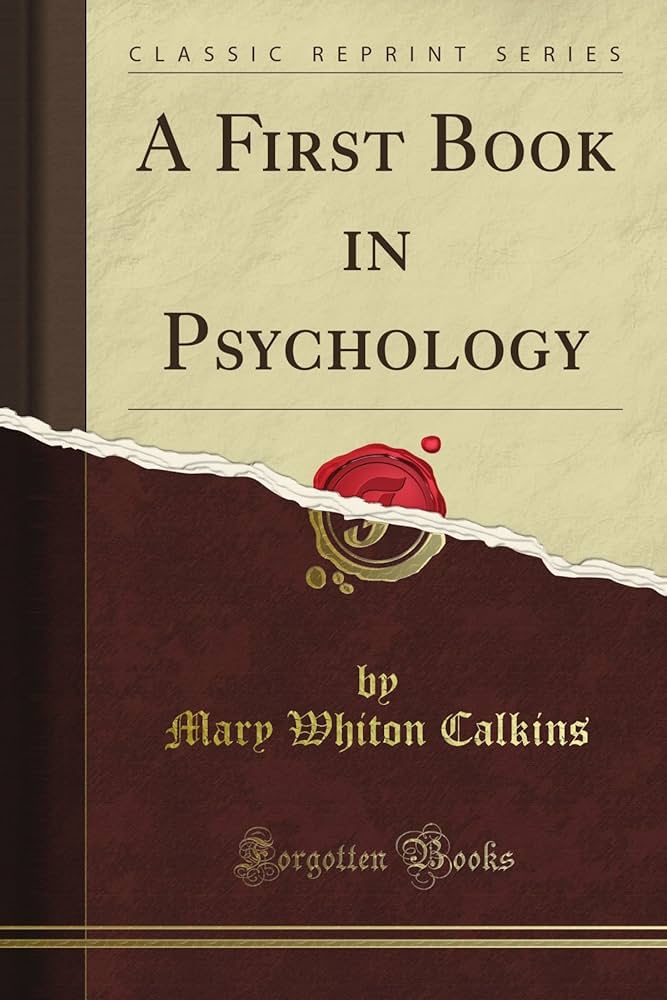
Confessions of a Psychology Newbie: What Happened When I Actually Read That Textbook
This is a beginner’s reading diary. I’ll be honest: my first psychology book sat on my shelf for three weeks. It wasn’t just any book – it was a textbook. An actual, 500-page, college-level introduction to psychology. The cover looked serious. The table of contents was intimidating. And the price tag? Let’s just say I’d better learn something.
Today, I’m sharing my raw, unedited journey, a beginner’s reading diary, through those first daunting chapters. If you’re staring at a psychology book feeling overwhelmed, this is for you.
Week 1: The False Start
Day 1: Opened book. Immediately hit the “history of psychology” chapter. Wilhelm Wundt? Structuralism? Functionalism? Closed book. Made tea instead.
Day 3: Tried again. Got through Wundt but hit “psychoanalysis.” Freud’s psychosexual stages? Oedipus complex? Felt vaguely uncomfortable. Watched Netflix instead.
The realization: Starting with history was like trying to learn cooking by starting with the history of fire. I needed a different approach.
Week 2: The Strategy Shift
I decided to skip ahead to something that actually interested me: memory.
What I read about: The multi-store model (sensory, short-term, long-term memory). Encoding, storage, retrieval. Why we forget.
My “aha” moment: The serial position effect – we remember beginnings and endings better than middles. Suddenly my study habits made sense! I’d always remembered the first and last parts of lectures best.
What I did differently: Applied it immediately. When studying, I started:
-
Breaking study sessions into smaller chunks (more beginnings and endings!)
-
Switching topics more frequently
-
Making the middle sections more distinctive with colors or drawings
Week 3: Finding My Rhythm
Chapter: Social Psychology
What surprised me: The bystander effect isn’t about people being callous. It’s about diffusion of responsibility and social cues. When others don’t react, we assume there’s no emergency.
Personal connection: Remembered a time I saw someone fall but hesitated to help because others were walking by. I’d felt guilty about that for years. Understanding the psychology behind it was strangely healing.
Chapter: Developmental Psychology
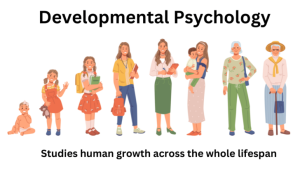
What fascinated me: Piaget’s stages of cognitive development. The idea that children don’t just know less than adults – they think differently.
Experiment I tried: With my young cousin, I tested conservation (understanding that quantity remains the same despite shape changes). Poured juice from a short glass to a tall glass. Sure enough: “There’s more now!” The theory came alive.
The Struggles Were Real

Challenge 1: Jargon overload
Terms like “heuristic,” “amygdala,” “operant conditioning” – I kept a running glossary in the margins. By Chapter 5, I realized many terms kept reappearing. They were becoming familiar.
Challenge 2: Research methods
The statistics and methodology sections made my eyes glaze over. My solution: Skimmed them initially, then returned when I encountered specific studies mentioned later.
Challenge 3: The “everything is connected” overwhelm
Learning about biological bases of behavior, then cognitive processes, then social influences – it felt disjointed. Then I hit a chapter showing how they integrate. The pieces started connecting.
My Practical Note-Taking System (That Actually Worked)
After trial and error, I developed this system:
-
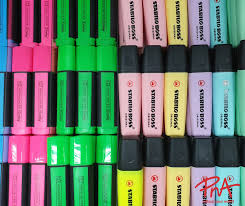
Color-coded highlights:
-
Yellow: Key concepts
-
Pink: Personal connections
-
Blue: Questions I have
-
Green: Things to try/apply
-
-
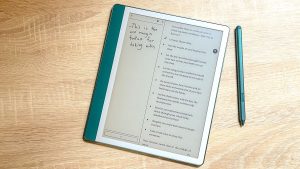
Margin notes:
-
“!” for surprising findings
-
“?” for confusing parts
-
“→” for connections to other chapters
-
“💭” for personal reflections
-
-
End-of-chapter ritual:
-
Write 3 main takeaways
-
Note 1 thing I’ll apply this week
-
List 1 question for further exploration
-
The Chapters That Changed Me
Cognitive Biases: Learning about confirmation bias, availability heuristic, and fundamental attribution error didn’t just teach me psychology – it changed how I navigate disagreements, consume news, and understand others’ perspectives.
Learning Theories: Understanding classical and operant conditioning explained so many of my own habits – why I reach for my phone at certain notifications, why some study methods worked better than others.
Motivation and Emotion: The self-determination theory (autonomy, competence, relatedness) gave me a framework for understanding what really drives my choices, not just what I tell myself drives them.
What I Wish I’d Known Before Starting
-
You don’t need to read linearly – Start with what interests you most
-
It’s okay to skim some sections and dive deep into others
-
Apply as you go – The learning sticks when you use it
-
Confusion is part of the process – Mark what confuses you and return later
-
One book won’t make you an expert – It’s your starting point, not your destination
My Biggest Takeaways After Finishing
-
Psychology is humbling – The more I learn, the more I realize how much I don’t know
-
Theories are tools, not truths – Different theories explain different aspects of behavior
-
Application transforms information – Reading about memory is interesting; using spacing effect to study is transformative
-
Critical thinking is the real skill – Not memorizing facts, but learning to evaluate claims
Your First Book Adventure
If you’re considering your first psychology book, here’s my advice, the psychology book reading fundamentals:
Choose based on curiosity, not “shoulds.” Interested in relationships? Start with social psychology. Fascinated by dreams? Start with consciousness chapters. Curious about habits? Learning theory.
Read with a pen in hand. Not just highlighting – writing your reactions, questions, connections.
Talk about what you’re learning. Explain concepts to friends (or pets!). Teaching solidifies learning.
Be kind to yourself. Some days you’ll devour chapters; some days a paragraph will be plenty. Both are progress.
The Book Was Just the Beginning
Finishing that textbook felt like graduating from a map to actual travel. I knew the landmarks, but the real exploration was just beginning. Every concept became a lens through which to view daily life. Every theory became a hypothesis to test in my own experience.
That book didn’t give me answers as much as it gave me better questions. And in psychology, the questions are where the real learning happens.
Let’s Start Your Reading Journey
This is a beginner’s reading diary. What psychological topic are you most curious about right now? Share in the comments, and I might be able to suggest where to start reading.
Or if you’ve already taken the plunge with your first psychology book: What was your experience? What surprised you? What challenged you?
Remember: Every expert psychologist once opened their first book and felt exactly as overwhelmed as you might feel right now. The journey of a thousand insights begins with turning a single page. So what’s your take on a beginner’s reading diary?

VN8888m, sounds like a Far East adventure! Hope they’ve got a good selection of games and the site runs smooth. Might have a wee look myself. Give it a go: vn8888m