Beyond Pop Psychology: Cultivating Your Inner Psychological Thinker
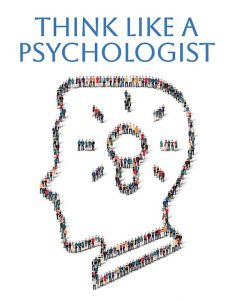
How to think like a psychologist? I will share my experience. When I started learning psychology, I made a crucial mistake: I collected facts like stamps. “Ooh, the Stanford Prison Experiment!” “Ah, Freud’s id, ego, superego!” I had trivia but no framework. I wasn’t thinking like a psychologist – I was just memorizing.
Then I discovered the real treasure isn’t psychological facts, but psychological thinking. It’s not what psychologists know, but how they think. And the good news? You can learn to think this way too.
What “Thinking Like a Psychologist” Really Means
It’s NOT about:
-
Analyzing your friends at parties
-
Diagnosing people based on articles
-
Using jargon to sound smart
It IS about:
-
Asking better questions
-
Evaluating evidence critically
-
Understanding complexity
-
Recognizing biases (including your own)
-
Balancing skepticism with openness
- Reading psychology books
The 5 Pillars of Psychological Thinking
Pillar 1: Embrace “It Depends”
Beginner thinking: “Does punishment work?”
Psychological thinking: “What kind of punishment? For what behavior? For which person? In what context? With what timing?”
Psychology rarely deals in absolutes. The most honest answer is often: “It depends on multiple factors.”
Try this: Next time you read a psychology headline like “Study shows X causes Y,” ask: “For everyone? Always? Under all conditions?”
Pillar 2: Look for Multiple Causes
Beginner thinking: “He’s angry because he has anger issues.”
Psychological thinking: “He might be angry because of biological factors (low blood sugar, genetic predisposition), psychological factors (unmet needs, past trauma), and social factors (recent stress, cultural norms about expressing anger).”
Human behavior is like a rope woven from many strands: biological, psychological, social, cultural, situational.
Exercise: Pick one behavior (yours or someone else’s). List at least 3 possible contributing factors from different categories.
Pillar 3: Distinguish Correlation from Causation
This is psychology’s most important (and most violated) thinking tool.
What people often think: “A study found happier people exercise more → Exercise causes happiness.”
What psychologists consider: “Maybe happier people are more motivated to exercise. Or maybe a third factor (like good health) causes both. We need experimental evidence to claim causation.”
Red flag phrases: “Linked to,” “associated with,” “related to” – these suggest correlation, not necessarily causation.
Pillar 4: Consider Alternative Explanations
Psychological thinking is detective work. When you see evidence for one explanation, ask: “What else could explain this?”
Example: A child acts out after parents divorce.
Possible explanations: Trauma from divorce, seeking attention, modeling behavior from stressed parents, normal developmental phase coinciding with divorce, reaction to changing routines…
The truth likely involves several factors.
Pillar 5: Recognize Your Own Biases
We study biases in others, but psychological thinking requires recognizing them in ourselves.
Common biases to watch for:
-
Confirmation bias: Noticing evidence that supports what you already believe
-
Fundamental attribution error: Blaming others’ behavior on personality, excusing our own on circumstances
-
Availability heuristic: Overestimating what comes easily to mind (like fearing plane crashes after hearing about one)
The Psychologist’s Toolkit: Questions to Always Ask
When encountering psychological information, ask: